Showing posts with label hip hop. Show all posts

Friday, March 20, 2009

You down with GOP?

Stephen Colbert and the remixed clips of RNC Chairman Michael Steele throw down in a rap battle. Stephen has the skillz to pay his childrens' private school billz...

The Colbert ReportMon - Thurs 11:30pm / 10:30c
Michael Steele's Rap Battle Response
comedycentral.com
Colbert Report Full EpisodesPolitical HumorMark Sanford


So, Michael Steele wants the Republican party to be relevant to today's youth, by bringing it into an "urban/suburban hip-hop context". He uses words like "bling-bling", and "off the hook", which don't exactly seem to roll off his tongue with ease.

Now, when you get past the choice of lingo...the man has a point. The Republican party as it has been in (at least the recent) past, has not had a lot to offer a more urban audience, and in African Americans in particular.


Steele and D.L. Hughley make a good point...the ideals behind the Republican party: Self Reliance and Self Determination with minimal government intervention and fiscal conservatism...are ideals that many American's can get behind. Yet, the coalition that the Republican party has built has at times taken it away from that ideal, and in so has become a party that seems to have a split personality. It's a party that wants you to keep your laws of our guns, but has no problem getting the law all up in my girl bits, as well as marriage equality. It's a party of populist rhetoric, of "the american dream" and the Horatio Alger myth, that takes a very pro-big-business stance in its policy making. It's a party that talks about cutting government spending, but has driven up the deficit with interventionist wars and tax cuts. It's a party that talks about being "pro-family values", but tends to cut supports for working families (SCHIP is a good example).

Partly this is an example of why the two party system doesn't make sense, and Jon Stewart's analysis of this in America, the Book is a great illustration of it. I mean, how did the anti-abortion and pro-death penalty positions get lumped into one political movement? Or anti-abortion and pro-gun? Or anti-death penalty and pro-choice? How do people who believe that government should not be telling us how to run our lives get along with people who want a constitutional amendment to ban same sex marriage? It's political red-rover, which is a fun game when you're 6, but not a great way to decide how to lead the nation.

I am a loyal democrat, living in one of the most liberal states in the country (gay marriage, decriminalized pot, AND universal health care...take THAT California :P) And yet at times I chafe at the "nanny state". If I want trans-fats with my french fries, who are you to say I can't, Brookline? It's especially hilarious when in the same 12 month period we ban trans fat but decriminalize pot.

In an ideal world, we would have many more parties, and open up the debate to more potential leaders with a variety of views. With this two party system, things become so entrenched. Bill Clinton got in some hot water for saying he wanted abortion to be "safe, legal, and rare". Now Michael Steele is having problems around his stance on abortion. With just two parties it is unlikely that we would ever have a pro-choice Republican (even though it fits with the reduced government intervention that small-government folks would be in favor of), and it is unlikely that we would have an anti-choice Democrat (even though there is a large portion of liberals who are anti-death penalty, and might feel the same about life after conception). With more parties there would be room for more diversity.

Having said that, right now we have a two party system, and while supporting more parties is important, we also need to figure out how to make the system we have as workable as possible. The party loyalist in me is taking...not joy....but is not exactly saddened to see the Republican party struggle to find it's identity after the recent losses in the elections, and in the view of the electorate. As a Democrat during the Bush years, it was painful at times to see my party divided by bickering, and sidelined by infighting. It is much less painful to watch it happen on the other side of the isle. And yet we need a viable Republican party to keep things in check. The biggest downside of living in Boston, is that my political views aren't challenged that often in my social circle. We all have essentially the same views about how government should be run. It makes for less awkwardness at cocktail parties, but it's not the best way to govern. I wondered why MA often had a republican Governor, even though it is a predominantly democrat state. Now I see the strength in having that balance. I like Patrick much more than Romney (and I think he would make a TERRIBLE candidate for president, especially against Obama), but it's good to have people challenging you on your positions so you can think about them more critically. The trick is for both sides to really THINK, and not just have an entrenched shouting match.

The other thing that is interesting about Steele is the issue of race. There aren't a lot of African American Republicans. D.L. Hughley described the RNC this year as looking like "Nazi Germany". For a racial breakdown of the parties, the Kansas City Star broke down the demographics of the nation, and the two national conventions.
Here’s America, 2006 numbers: 74% white, 14.8% Hispanic, 13.4% African-American, 50.9% women.

Delegates to the 2008 Republican convention: 93% white, 1.5% African-American, 5% Hispanic, 32% women.

Delegates to the 2008 Democratic convention: 65% white, 23% African-American, 11% Hispanic, 50.1% women.

And I think some of that has to do with the legacy of the republican party and segregation. To this day there seems to be more racial insensitivity coming from the republican party (although one could argue that "Liberal White Guilt" and policies born out of unexamined race/class stereotypes are just as harmful, if more covert). And I think this lack of sensitivity may express itself in policy that is build from a position of privilege, and doesn't recognize just how uneven the playing field actually is. Even Condalezza Rice pointed out the difficulty we have in dealing with racism and the legacy of slavery here.

RICE: [T]hat’s not a very pretty reality of our founding, and I think that particular birth defect makes it hard for us to confront [race], hard for us to talk about [race], and hard for us to realize that [race] has continuing relevance for who we are today. … [D]escendents of slaves, therefore, did not get much of a head start. And I think you continue to see some of the effects of that. (from thinkprogress.com)


As much as we would like to believe that Obama signals a "post racial society", I don't think we're there yet. Rice, Powell, and Steele are exceptions that prove the rule. If things truly were equal, there would not be the performance gaps in school, and inequalities in incarceration and the death penalty.

Interestingly, when Steele spoke to Chuck D about hip-hop, he assumed that Chuck came from "the streets", as opposed to someone who was raised in the suburbs of Long Island by political activists, and who went to college. What does it mean that Steele, who is the first African American leader of the Republican party assumes that an African American hip-hop star was from "the street"? Is it about race? Dose Steele see himself as the exception that proves the rule? I think some of it might be an outdated understanding of the larger culture and the culture of hip-hop. The republican message (especially the one that Sarah Palin delivered) focused on "small town america" and the values of an America that I think exists more in the mind than anywhere else. It's not just kids from "urban/suburban settings" that are listening to hip hop. Three of the top five songs in the hot 100 are hip-hop/R&B songs. I don't think they realize how much of hip-hop culture is out there in "small town america".

The interview with Steele has me intrigued. It will be interesting to see how the GOP will respond to him, and any changes he might try to institute. And it will be interesting to see if he is interested in enacting real change in the party platform, or just covering the old planks with some new "bling"

Wednesday, February 18, 2009

When is a positive female role model not a positive female role model?

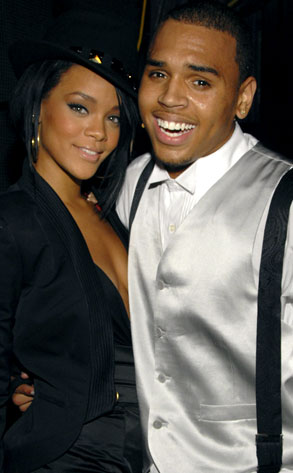
So, I was reading some of my favorite blogs, when I came upon this article in the LA Times about Rihanna and Chris Brown that I saw while reading a post on Idolator (a music focused pop culture blog that I enjoy). For those who haven't heard about this, Chris Brown (a young R&B star who hit #1 with the song "Run It" as a 16 year old, and recently had a hit with "With You" who has been referred to as a young Michael Jackson) recently turned himself in for alleged felony domestic battery after what appered to be a physical altercation with his girlfriend Rihanna (who is a pop star in her own right, and is probably best known for her hit "Umbrella", although between you and me, I like "SOS" more). This assault happened right before the Grammy's and is believed to be related to their pulling out of performing live. There have also been reports in the gossip blogs/magazines about people who saw Rihanna at the hospital, and it appears to not have been a mild assault (not that any assault would be OK).

Now, there is a lot that can be said, and has been said, about misogyny in hip-hop. Love Hurts is an article from Vibe magazine that was linked to in Feministing about domestic violence in hip hop culture that is much more well researched and thought out than I'm ready to do at this point. There is a long tradition in hip-hop and R&B around objectifying women, and talking about "smacking my bitch up" or "keeping hoes in line". There are many hip hop artists that worked their way up from hustling on the street, and have told their stories in music. And there are more hip hop artists, and kids who've grown up on hip hop, who have learned the language and emulated the attitudes they've seen portrayed. There is an interesting point in the Vibe article about how women in African American communities have had more success than men in certain aspects, and that an emasculation in one area can lead to a sense of needing to be hyper-masculine in other areas, including "keeping your woman in line". Kevin Powell refers to this as "Bootleg Masculinity" (You might remember him from the first season of The Real World. He wrote an essay about ending violence against women that can be read here). But this really deserves a separate post.

Anyhow....that is a long walk to get to this quote from the LA Times article about how the assault by Chris Brown against Rihanna might impact the stars:

Although Rihanna has not been accused of doing anything wrong, some companies may shun her as well, she said.

"The reason why she has been used as a celebrity endorser is that she represents something very positive and in particular a strong female role model, and when she is associated with a situation like this it can have an impact," Green said.


What pisses me off is the idea that somehow being the victim of domestic violence makes Rhianna no longer a good role model. As one of my friends in my other blog put it....would it make her a better role model to sit back and take it and not speak up? What are we to take from this kind of thinking? Does this imply that Rihanna did something to deserve it?

One of the fallacies in the cycle of domestic violence is both parties believing that the victim "did something to deserve it". The perpetrator says "I wish you hadn't made me do this", and the victim thinks "I shouldn't have pushed them". What's really interesting is the "cycle of violence", where there is a honeymoon period, followed by building tension, then a violent act. At times for people on the recieving end of the violence, the tension in the second part can become too much, and they may intentionally do something they know will set of the perpetrator, just to get it over with. Does that make the violence their fault? There is this cultural myth about forces in men that are beyond their control. Men become violent or rape when women push them too far or are too seductive. Eve bit the apple first, but Adam was unable to resist her tempting him, so while they were both punished, she recieved the additional punishment of pain during childbirth. It is interesting how a culture that calls women "the weaker sex" can also confer upon women this power that men find irresistable.

But beyond who is or is not to blame, is the concept that "good girls don't". Good girls don't get beaten or raped, that it only happens to other people, bad people who make bad choices (which gets us back up to this power that women are supposed to wield over men, but only in ways that make men behave badly). This is why rape and domestic violence goes so underreported, victims are afraid of what other people will think of them. There are massive ammounts of shame that survivors of domestic violence and rape often experience because they are afraid tha they are "damaged goods". We tell survivors that "it's not your fault" and that "it doesn't change who you are".

So, what's a "strong female role model" to do? This can get into an interesting breakdown of the venn diagram that is identity politics. For instance, I am a libreral, I am a feminist (these are pretty strongly overlapping circles), I am also pro-organized labor and come from a working class background (now we see some divergence). I can't speak from experience about groups I don't belong to, but I can imagine how there would be pressure from different groups to go different ways. On one hand, as a female role model Rihanna might feel pressure to step forward and speak out against violence. On the other hand as an African American female role model there might be pressure to sweep this under the rug, especially because Chris Brown was also seen as a positive role model. Not to mention outside society's beliefs about what it means to be a victim/survivor of domestic violence and the negative pressure of not wanting to be labeled in that way knowing what those labels carry with culture at large. And of course there is the venn diagram of one that is made up of your own experiences and beliefs and what is best for you as an individual.

What is unfortunate is that not matter what Rihanna chooses to do in response to this violence, we are seeing writ large in the media these attitudes towards domestic violence and survivors. Regardless how how she chooses to respond, we are being told that Rihanna is no longer considered a "strong female role model" by those in charge because (allegedly) her boyfriend chose to beat her up. It reinforces all of those messages about being the victim's fault, and that somehow the victim is a bad person because of what someone else chose to do to them. It's just so victim-blaming and it makes me angry.

PS Feministing also has a great breakdown of Chris Brown's dad's statement to the media.

PPS. I know that men are victims of domestic violence and rape, and that there are as many forms of "person on person" violence as there are ways to permutate that dynamic. I don't mean to be heteronormative, but this is a good example of the "stereotypical relationship" and illustrates the mainstream culture's view of relationships and relationship violence.

PPPS. I am not entirely comfortable with my use of terms like victim, and domestic violence because I don't nessisarily think they're the best terms. But they're the ones we use most commonly, so that's what I used here. Expect to see some writing on the concepts of victim and survivor and what naming means and how it can get all sticky and lead to multiple post scrips on a blog post in ANOTHER blog post.

PPPPS. I was thinking about Tina Turner as I wrote this, and how she was able to overcome her abuse by Ike. I would have to read a LOT more to really speak intellegently about it, but her career also struggled immediately after leaving Ike, and the wiki mentioned that she was considered "unmarketable" for a significant time in the US, while still successfully touring abroad. It would be interesting to see if there is any information about differences in attitude towards domestic violence in europe vs the US and how that might have played into this dichotomy, or if the european audience had been unaware of her personal struggles.